How Rare Are Shark Bites? How to Read the Numbers Without Being Misled
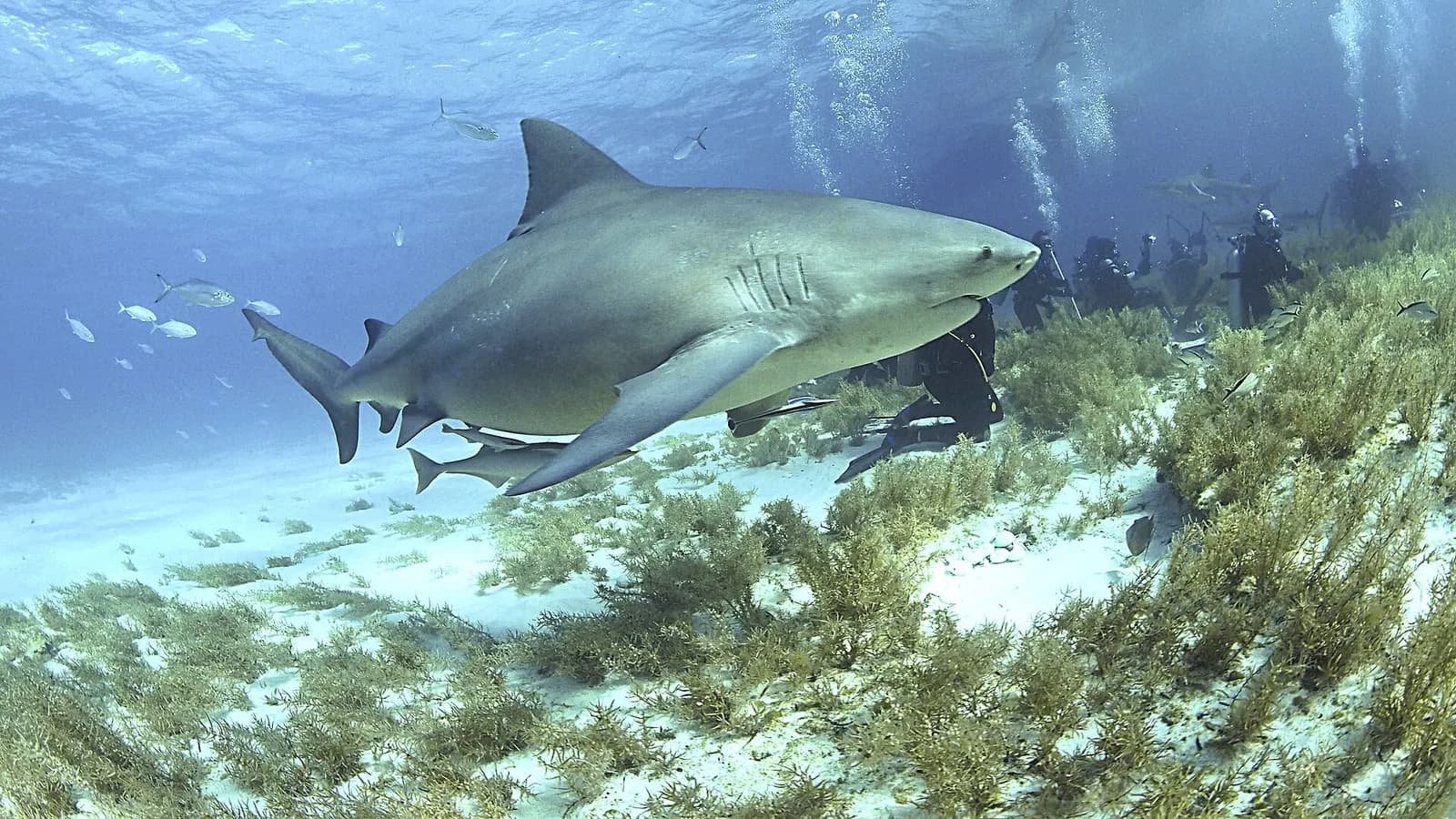
How Rare Are Shark Bites?
Shark incidents receive enormous attention, but the number of documented unprovoked bites worldwide remains small. The International Shark Attack File reported 65 confirmed unprovoked bites worldwide in 2025 after investigating 105 alleged shark-human interactions. It also reported nine unprovoked fatalities that year.
Those figures provide useful context, but they still do not tell an individual swimmer, surfer or diver the exact chance of being bitten.
Risk is a denominator problem.
A count is not a probability
Suppose one coastline records more shark incidents than another. It is tempting to conclude that it is automatically “more dangerous.” But a raw count tells us only how many events were recorded. It does not tell us how many people entered the water, how long they stayed there, what activities they performed or how much coastline was observed.
A busy surfing destination can accumulate more incidents partly because millions of hours of human activity take place in the water. A remote beach may record no incidents while receiving very little use.
Without a reliable exposure denominator, incident totals should be interpreted as records of events, not as personalized odds.
Reporting varies by place and time
Modern incidents in popular coastal areas are likely to generate emergency records, news coverage and online discussion. Historical events may survive only in newspaper archives or local accounts. Incidents in remote regions may never enter international databases at all.
That means older and geographically sparse data are affected by reporting bias.
Even recent data can differ between organizations because investigators may classify uncertain events differently or receive evidence at different times.
Classification changes the total
A number labeled “shark attacks” might include provoked handling incidents, boat bites or questionable cases. Another publication may use only confirmed unprovoked bites.
Before comparing two totals, check the definitions.
On this site, the map lets readers filter verification status and incident classification separately so that a fresh media report is not silently mixed with a long-investigated case.
Human behavior matters
Where people swim and surf changes over time. Coastal populations grow. Tourism shifts. New sports become popular. Weather affects beach attendance. Improved rescue services may alter outcomes.
For that reason, a rise in recorded incidents does not automatically mean sharks have become more aggressive. It may reflect more people in the water, better reporting, local ecological change, random year-to-year variation, or several factors at once.
Species identification is often uncertain
A shark may be seen only briefly. Water visibility can be poor. Witnesses may not know the distinguishing features of similar species. Media reports may repeat an early guess.
Species-level statistics should therefore use confidence labels. “Reported white shark” is not equivalent to a species identification confirmed by physical evidence or specialist review.
What the 2025 data show
ISAF's 2025 summary reported 65 confirmed unprovoked bites worldwide. The United States accounted for 25 and Australia for 21. Florida recorded 11, with six in Volusia County.
The same report emphasized that the worldwide number remained very low and that annual variation is expected.
Those figures are useful for describing a particular year's investigated cases. They are not a prediction of what will happen at a specific beach tomorrow.
A better way to use this site
Use Shark Incidents to answer descriptive questions:
- Where have incidents been recorded?
- When did they occur?
- How were they classified?
- Which activities were involved?
- Was a species actually identified?
- What sources support the record?
- Is the report new, corroborated or verified?
Avoid using a map pin count as a “danger score.”
A responsible incident database should make uncertainty visible rather than compressing complex events into a frightening ranking. The map is a historical and current-events reference tool, not a guarantee that a place is safe or unsafe.